
The skill that predicts success more than IQ and it's trainable

Executive functioning is your child's brain's air traffic control system: working memory, inhibitory control, and cognitive flexibility, coordinating everything a student does in and out of the classroom. Grades K–12. No diagnosis required.

HEADER

  • #1: Predictor of academic success, above IQ

  • 3: Core skills: memory, control, flexibility

  • K–12: Every grade level benefits

  • Life: Impact on career, health & relationships

What is Executive Functioning?

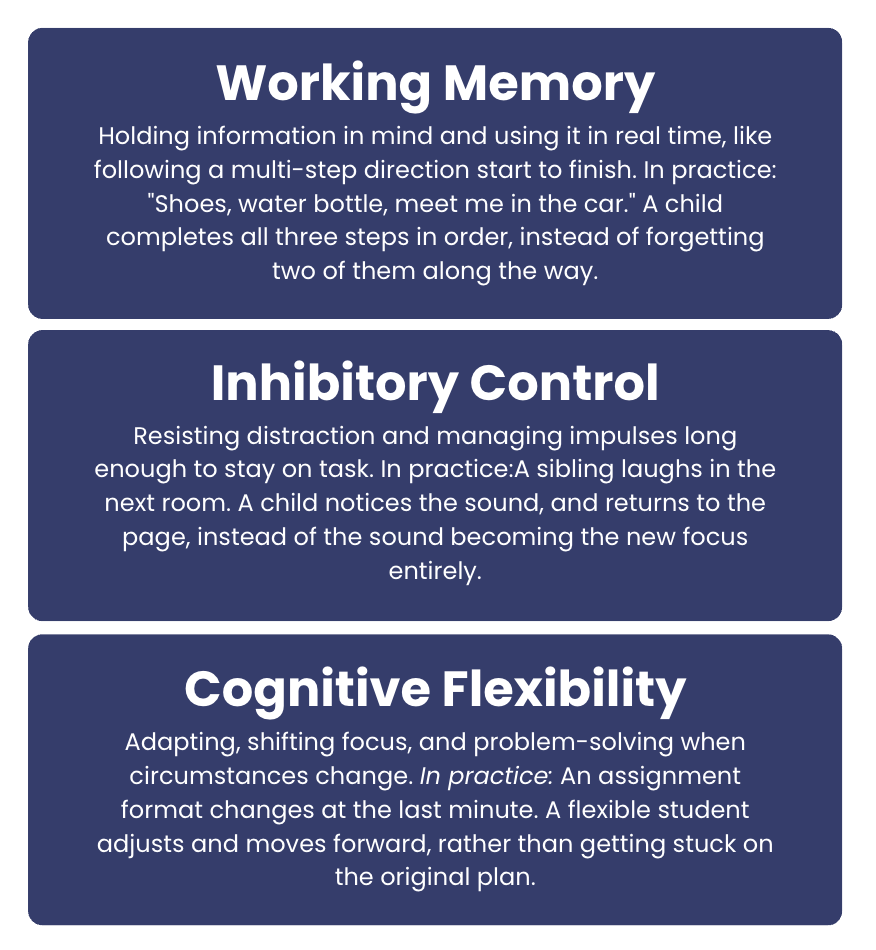
Executive functioning is the brain's air traffic control system, managing working memory, inhibitory control, and cognitive flexibility to coordinate everything a student does in and out of the classroom.

Three skills coordinate everything your child does
  • Study Skills

    Many students struggle not because they don’t understand the material, but because they haven’t been taught how to manage learning itself. Study skills sessions focus on helping students develop the systems and strategies needed to stay organized, manage time, and approach schoolwork with confidence.

    Students learn practical tools for breaking large assignments into manageable steps, organizing notes and materials, and preparing effectively for exams. Instructors also guide students in building executive functioning skills such as goal setting, time management, and monitoring their own progress.

    Over time, students become more independent and confident learners. Families often notice reduced homework stress, improved focus, and stronger study habits that carry across subjects.

    Skills we support include:

    • Organization and planning strategies
    • Effective note-taking systems
    • Time management and task breakdown
    • Test preparation routines

  • Math Tutoring

    Math can feel frustrating when concepts are explained the same way repeatedly without connecting to how a student actually learns. Hoover Scholars math instruction uses a multimodal approach that helps students experience math concepts in several ways, strengthening understanding and reducing anxiety.

    Instructors may explain concepts verbally, draw diagrams or graphs, use physical or digital manipulatives, and guide students through step-by-step problem solving. Students are encouraged to talk through their reasoning and model solutions so abstract ideas become clearer and more concrete.

    This approach helps students build deeper conceptual understanding, improve accuracy, and develop confidence when tackling complex problems.

    Subjects supported include:

    • Pre-Algebra
    • Algebra I & II
    • Geometry
    • Pre-Calculus
    • Calculus
    • Statistics

  • Science

    Science becomes far easier to understand when students can interact with concepts instead of only reading about them. Hoover Scholars science sessions combine discussion, visual models, and hands-on learning to make complex topics more concrete and memorable.

    Students may build models, explore diagrams, engage in guided discussions, or work through interactive activities that help connect ideas across topics. This multimodal approach strengthens comprehension while encouraging curiosity and critical thinking.

    As students build confidence in their understanding, they often experience improved performance in class, stronger problem-solving skills, and greater independence when working through challenging material.

    Subjects supported include:

    • Biology
    • Chemistry
    • Physics
    • Anatomy & Physiology
    • Earth Science
    • Forensics

  • Writing & English Language Arts

    Writing doesn’t have to feel intimidating. Hoover Scholars instructors guide students through the writing process step by step, helping them organize ideas, strengthen vocabulary, and build confidence in expressing themselves.

    Students use tools such as graphic organizers, visual outlines, color-coding systems, and guided brainstorming to structure their thoughts before moving into drafts. Reading comprehension and language skills are reinforced through multisensory strategies that make text easier to understand and engage with.

    With consistent practice and supportive feedback, students learn that writing is a process—and that their ideas matter. Over time, they gain the confidence to communicate clearly and approach reading and writing tasks with greater independence.

    Skills supported include:

    • Reading comprehension and fluency
    • Vocabulary development
    • Writing organization and structure
    • Sentence construction and editing
    • Text analysis and discussion

When students receive content instruction from professionals who understand learning differences, progress accelerates.

Let’s talk about what your child needs and how Hoover Scholars can support their growth.

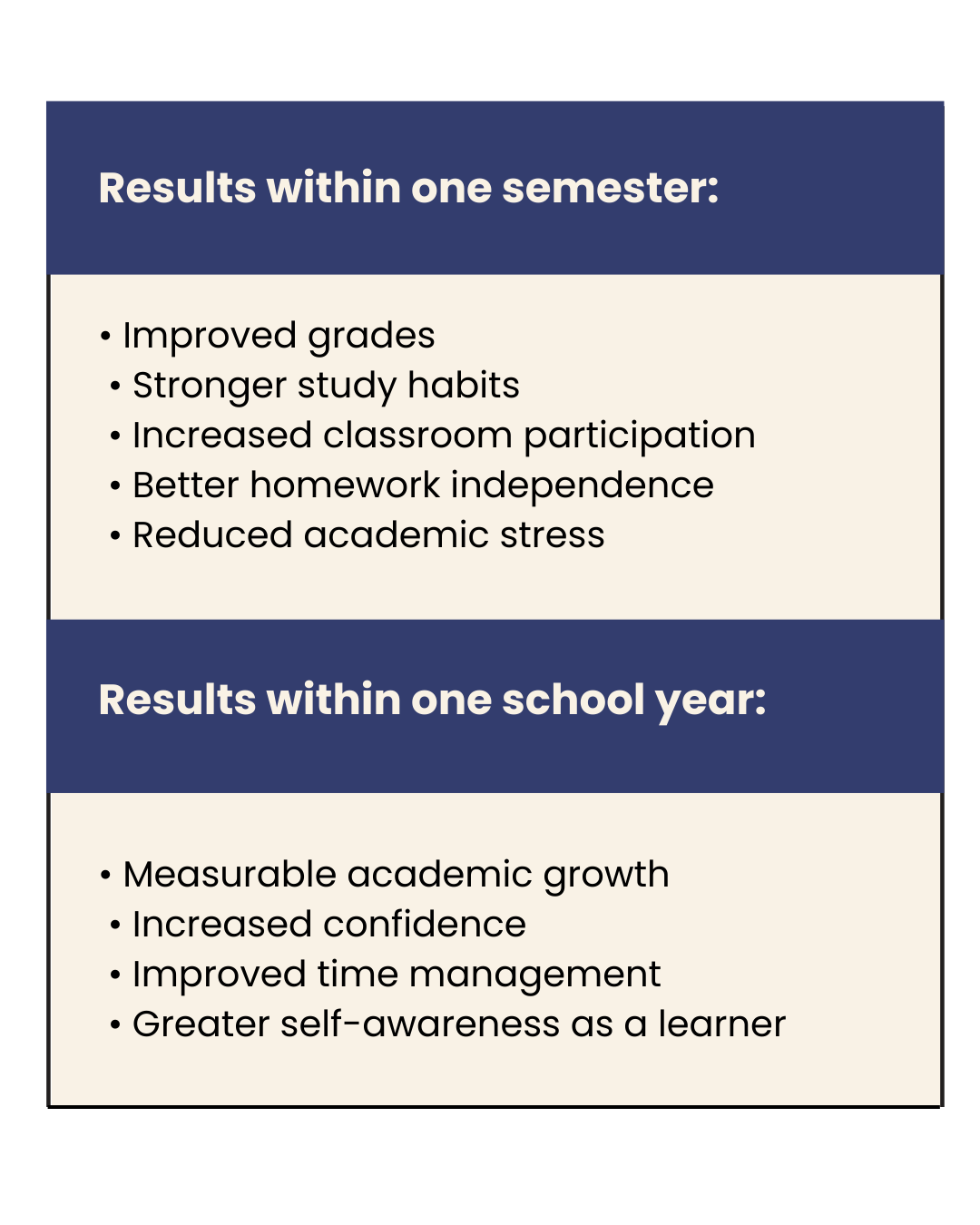
Our goal isn’t just short-term improvement. It’s long-term academic independence.

Executive Functioning FAQ:

Ready to receive personalized support for your child?